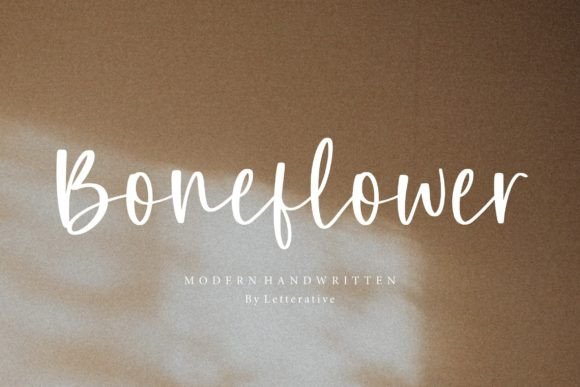
Boneflower: A Script Font for Creative Projects
There I was, staring at a blank brand board, trying to figure out how to make the logo stand out. The client wanted something elegant but approachable, something that felt personal yet professional. That’s when I pulled out Boneflower, a script font that had been sitting in my library for a while, waiting for the right moment.
Boneflower is a dazzling script font, neatly crafted and highly detailed. It has a certain grace to it, like a well-tailored suit or a perfectly brewed cup of coffee. The curves are fluid, the strokes are balanced, and there's an undeniable charm in how it carries itself on the page.
The First Mockup
I started by testing it on a simple logo draft. The font brought a sense of movement and energy, making the text feel alive. It wasn’t too ornate, which meant it could work in both digital and print formats without losing its appeal. I tried it on a café name, a boutique tagline, and even a skincare brand’s tagline. Each time, it adapted beautifully, adding a touch of sophistication without overwhelming the design.
One thing I noticed right away was how it handled different sizes. On a business card, it looked refined. On a shop sign, it had presence. And on a social media graphic, it caught the eye without being hard to read. That versatility made me think about how it could be used across multiple brand elements.
Brand Identity and Visual Hierarchy
In a branding project, visual hierarchy is everything. Boneflower works best as a display or headline font, perfect for logos, headings, and key messaging. Its intricate details make it ideal for short-form text where impact matters most. But I also found that pairing it with a more straightforward typeface—like a serif or sans serif—helped balance the design and improve readability.
For example, when designing a packaging mockup, I used Boneflower for the product name and paired it with a clean sans serif for the description. The contrast created a nice rhythm, allowing the brand to feel both artistic and professional. It also helped maintain consistency across different materials, from labels to brochures.
Designing for Different Mediums
One of the things I love about Boneflower is how it translates across mediums. Whether it’s a website header, a flyer, or a printed menu, it maintains its character. I’ve seen it work well in editorial design, where it adds a personal touch to headlines or captions. In web design, it can be used sparingly for hero sections or call-to-action buttons, giving the site a unique personality.
On a shop sign, it added a warm, inviting feel. On a label sticker, it gave the product a handcrafted quality. And on an Instagram post, it stood out as a focal point, drawing attention without being distracting. These real-world applications made me realize just how versatile this font could be.
Practical Tips for Using Boneflower
If you’re considering using Boneflower in your next project, here are a few tips. First, test it in different sizes and contexts. What looks great on a large banner might not work as well on a small business card. Second, check the font’s styles and alternates. Some script fonts have variations that can add depth and interest to your designs.
Also, consider multilingual support if your project involves other languages. And don’t forget about licensing—make sure you have the right permissions for commercial use. These little details can save you a lot of headaches down the line.
Pairing Boneflower with Other Fonts
When it comes to font pairing, Boneflower plays well with others. A classic serif font like Georgia or Playfair Display can create a timeless look, while a modern sans serif like Montserrat or Lato offers a fresh contrast. Handwritten fonts can add a personal touch, and bold, geometric typefaces can provide a strong counterpoint.
The key is to find a balance. Use Boneflower for what it does best—headlines, logos, and accents—and let other fonts handle the body text and supporting content. This approach keeps the design cohesive and easy to read.
Final Thoughts on Boneflower
Boneflower is more than just a pretty font. It’s a tool that can elevate your design work, adding a level of artistry and professionalism. Whether you’re working on a café identity, a boutique branding project, or a creative studio’s marketing materials, this script font has the potential to enhance your visual language.
As a designer, I always look for fonts that bring something unique to the table. Boneflower does exactly that. It’s not just about aesthetics—it’s about how the font makes the audience feel. And in that way, it’s a valuable addition to any designer’s toolkit.
So next time you’re working on a branding project, give Boneflower a try. You might just find that it’s the missing piece you didn’t know you needed.